
LISTEN OR DOWNLOAD APRIL 19 EPISODE HERE:
Porcupine Wood Products announce clearcut logging is about to begin on what is practically the last uncut mountainside along Kootenay Lake. It’s the slope between Argenta and Johnsons Landing.
Today on the show we talk to BC researcher Ben Parfitt about last year’s record logging profits in the province and the coming ‘falldown’ when the trees get even scarcer.
The Sierra Club of BC and EcoJustice are taking the BC government to court for not following through on its CLEAN BC climate commitments. Jens Wieting from the Sierra Club tells us why they are resorting to a court challenge.
Climate activist Avi Lewis is highly critical of the federal budget’s climate actions. We have a clip from Avi explaining what’s wrong with the budget from a rabble.ca webcast.
This Friday April 22 is EARTH DAY and there are a host of events to talk about.
EVENTS AND LINKS
Ben Parfitt’s analysis of forestry industry in BC.
PolicyNote.ca/green-gold
rabble.ca Off-the-Hill online panel on the federal budget with Avi Lewis and others.
ENVIRONMENTAL GROUPS SUE B.C. GOVERNMENT OVER ‘MISSING IN ACTION’ CLIMATE PLANS
EVENTS
Thursday April 21. 6:30 pm
Let’s talk divestment!
Mir Centre for Peace is holding an interactive online conversation on divestment from fossil fuels. Expert participants Kenzie Harris (from banking on a Better Future), Bruce Wilson (Iron & Earth) and Joe Reid (Vancity). will talk about how divestment can help reduce fossil fuels and climate impacts. You can register for this Thursday’s event at the Mir Centre page on the Selkirk College website: selkirk.ca/event/mir-peace-cafe. https://selkirk.ca/event/mir-peace-cafe.
__________________________________________
EARTH DAY FRIDAY, APRIL 22nd
Noon Friday April 22
Closing the Circular Economy Loop Locally
From noon-1 pm, the West Kootenay Climate Hub webinar on Closing the Circular Economy Loop Locally
We will hear about businesses that have taken up this challenge and are recycling plastic into products without leaving the local area.
Register through https://www.westkootenayclimatehub.ca/
__________________________________________
3:30 PM Friday April 22nd
Earth Day Event for Families
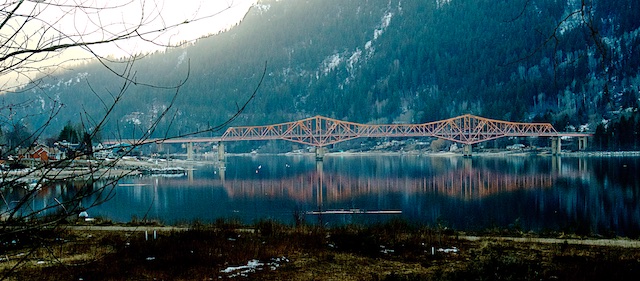
The Nelson United Church Spirit Explorers and the Nelson Interfaith Climate Action Collaborative is holding a special Earth Day event for kids and families. Starting at starting at Duck Bay (between Lakeside Park and the mall in Nelson). Naturalist Joanne Siderius will share knowledge and stories about the waterfowl.
__________________________________________
ENVIRONMENT NEWS
A University of Calgary study says there may be a link between the density of certain oil and gas operations, fracking, and increased health risks for nearby pregnant women and their babies.
“There is very little research about fracking as it relates to the health of pregnant people and children living near these sites,” said Amy Metcalfe, a co-principal investigator and associate professor in obstetrics and gynecology at the university’s Cumming School of Medicine.
“Our study found the rate of spontaneous preterm deliveries — birth before 37 weeks — increased significantly relative to the number of fracturing sites within 10 kilometres of their home.”
Metcalfe said the women living near between one to 24 well sites had a 7.4 per cent risk of early delivery and the risk increased to 11.4 per cent for those near 100 or more fracking operations. She said premature births present a health risk.
https://www.cbc.ca/news/canada/calgary/calgary-fracking-premature-1.6408680?__vfz=medium%3Dsharebar
_______________________________________
Canada was warned in 2012 by its own scientists that a virus was infecting both farmed and wild salmon. Canadian governments have been saying for years that risks to salmon were low.
The federal government says it will phase out open-pen industrial fish farms off the coast of British Columbia by 2025. But new applications for more open-net farms are still being filed.
In 2012, biologists with the department of fisheries and oceans investigated the presence of the virus, which has been found in both farmed and wild salmon. This March a federal information commissioner ordered the report be released, after a multi-year access-to-information battle between the group Wild First, which opposes open-pen salmon farms, and the federal government. Details of the report were made public just last week in a story in the Globe and mail.
Kristi Miller-Saunders, a federal biologist and an author on the study, called the delay in releasing the report a “travesty” and said its omission has contributed to longstanding doubt over whether farmed salmon were infecting wild salmon.
PRV causes anemia and jaundice in farmed salmon. But in wild Chinook, whose numbers have collapsed in recent years, the virus is associated with a different disease which causes blood cells to rupture, leading to kidney and liver damage.
https://www.theguardian.com/world/2022/apr/14/infected-farmed-wild-salmon-canada-virus-report
________________________________
In the wake of the United Nations IPCC report that ashowed the “bleak and brutal truth” about the climate emergency, a leading America economist says it is time to nationalizie the U.S. fossil fuel industry.
Writing for The American Prospect, Robert Pollin, an economics professor and co-director of the Political Economy Research Institute at the University of Massachusetts Amherst said: “With at least ExxonMobil, Chevron, and ConocoPhillips under public control, the necessary phaseout of fossil fuels as an energy source could advance in an orderly fashion.”
We must begin advancing far more aggressive climate stabilization solutions than anything that has been undertaken thus far, Pollin says. Within the U.S., such measures should include at least putting on the table the idea of nationalizing the U.S. fossil fuel industry.”
He says “at least in the U.S., the private oil companies stand as the single greatest obstacle to successfully implementing” a viable climate stabilization program.
The expert proposed starting with “the federal government purchasing controlling ownership of at least the three dominant U.S. oil and gas corporations: ExxonMobil, Chevron, and ConocoPhillips.”
______________________________
Quebec’s National Assembly voted last week to ban new oil and gas exploration and shut down existing drill sites within three years. Quebec is one of the first governments on the planet to issue such a ban.
“By becoming the first state to ban oil and gas development on its territory, Quebec is paving the way for other states around the world and encouraging them to do the same,” Montreal-based Équiterre said in a release.
“The search for oil and gas is over, but we still have to deal with the legacy of these companies,” added Environnement Vert Plus spokesperson Pascal Bergeron. “Although the oil and gas industry did not flourish in Quebec, it left behind nearly 1,000 wells that will have to be repaired, plugged, decontaminated, and monitored in perpetuity.
______________________________
Limiting leaks from fossil fuel facilities is “low-hanging fruit” for stabilizing atmospheric methane levels, a key greenhouse gas pollution. Methane levels have shown the largest increase on record last year and hit the highest level since scientists began collecting data 39 years ago.
The U.S. National Oceanic and Atmospheric Administration (NOAA) preliminary analysis, released last week, showed atmospheric methane averaging 1,895.7 parts per billion last year, a 162% increase from pre-industrial levels and an increase of 17 ppb over 2020. The agency also found carbon dioxide levels increasing at “historically high rates”, to 414.7 parts per million last year. It was the tenth year in a row when CO2 concentrations rose by more than 2 ppm, amounting to “the fastest sustained rate of increase in the 63 years since monitoring began.”
Methane is less abundant in the atmosphere than carbon dioxide, but it has still become a focus point for climate scientists because of its potent short-term effects on global warming, the New York Times explains. Global concentrations have steadily increased over the past few decades, but the amount reported in 2021 broke the standing record from 2020 for the largest annual increase ever.
Fugitive methane releases are a particular problem for gas fracking operations like those found in North east BC.
___________________
Extinction Rebellion Nanaimo: reports that activist Howard Breen is on Day 18 of his hunger strike to SAVE OLD GROWTH. He’s gone from 210 lbs to 192 lbs. He is quite dizzy but holding strong. He’s not giving in. He remains in jail after being arrested for ‘glueing on’ at a Royal Bank branch in support of the Wet’suwet’en First Nation. His trial is not until July. His fellow hunger striker Brent Aichler has not eaten in 18 days. The goal of their hunger strike is to have a meeting with Katrine Conroy, Minister of Forests. You can find and suppport Howard Breen on facebook.
___________________
Saturday May 7, 1-4pm Hug the Mountain! Stand against the Trans Mountain Pipeline Expansion, Protect the Planet
From Protect the Planet, Stop TMX: is looking to attract 5,000 people who will assemble in a huge human chain, circling Burnaby Mountain in a hug, to convey a powerful message of shared concern for our Mother Earth. The Hug the Mountain event is coming up Saturday May 7th from 1-4 pm. Organizers say bring your family and friends, a lawn chair and picnic. Become a part of local history, and be on record for protecting the planet!
 Longest running Enviro News show on the Radio!
I will never forget the unsigned editorial that a local community newspaper (The Surrey Now-Leader) printed just before Earth Day 2017, titled “Earth Day in need of a facelift”. Varied lengths of the same editorial, unfortunately, was also run by some sister newspapers, all owned by the same news-media mogul who also happens to be an aspiring oil refiner.
It opined that “some people would argue that [the day of environmental action] … is an anachronism”, that it should instead be a day of recognizing what we’ve societally accomplished. “And while it [has] served us well, in 2017, do we really need Earth Day anymore?”
Until reading this, I had never heard anyone, let alone a mainstream news outlet, suggest we’re doing so well as to render Earth Day an unnecessary “anachronism”. Considering the sorry state of the planet’s natural environment, I still find it one of the most absurd and irresponsible acts of editorial journalism I’ve witnessed in my 35 years of newspaper consumption.
LikeLike