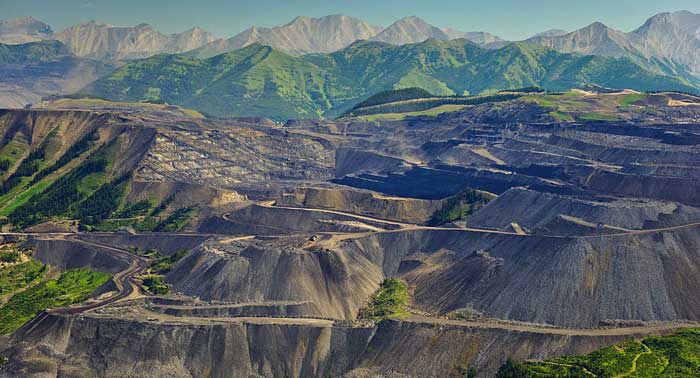
The huge coal mines in BC’s Rocky Mountains are somewhat hidden in high mountain valleys, but they remain the province’s largest contribution to global CO2 emissions. Now Teck Resources plans to double the size of its largest mine, without a full environmental assessment. Lars Sander-Green, Mining Coordinator with Wildsight in Kimberly talks about BCs black secret. The pandemic has drastically affected small business in BC and our local Kootenay Carshare Coop is no exception. But it turns out the Carshare is really resilient. We talk with executive director Colleen Doyle about how the Coop is doing. And we have a snip from Grand Forks activist Jennifer Houghton on what BC should do about our forestry crisis.
Listen to or download the show here:
Links mentioned in the show:
Jennifer Houghton’s submission on BC’s budget for 2021.
Wildsight info and campaign about Teck’s Castle coal mine: https://secure.wildsight.ca/federaleaforcastle
The Kootenay Carshare Coop: https://www.carsharecoop.ca
Environment News for June 30, 2020
Local elections in France last week saw thge environmentalist party and its left-wing allies win control of a clutch of major cities including Lyon, Strasbourg and Bordeaux.
The centrist party of President Emmanuel Macron, La Republique En Marche (LREM) failed to capture any major cities, prompting talks of a governmental reshuffle.
In Paris socialist mayor Anne Hidalgo — endorsed by the greens — was re-elected with 48.7% of the vote.
With the pandemic the local elections had a record low voter turn-out, which may have given die-hard green voters an upper hand.
__________________________
The U.S.-based Natural Resources Defense Council put out a last week called The Issue with Tissue 2.0: How the tree-to-toilet pipeline fuels our climate crisis. The report says a significant portion of virgin wood fibre from the one million acres of Canadian boreal forest clear-cut every year goes to large American toilet paper producers, notably Proctor and Gamble the maker of Charmin’.
“With every roll of their unsustainable toilet paper, companies are pushing the world toward an unthinkable future, destroying ancient and irreplaceable Canadian boreal forest for something as short lived as a flush,” said co-author Jennifer Skene.
__________________________
Coutts, the private banker to Queen Elizabeth II and the rest of the British royal family, has promised to drop its investments in the tar sands/oil sands, Arctic oil and gas exploration, and thermal coal extraction and generation, and to reduce the carbon intensity of its holdings 25% by the end of next year.
“The pledge was made in the company’s 2020 Sustainability Report, which also found that the firm had achieved a 23% reduction in carbon emissions from its Coutts Invest funds so far this year,” UK Investor Magazine reports. The bank is aiming for a 50% emissions reduction in its overall holdings by 2030.
__________________________
Texas oil producers burned a record $749.9 million of gas by flaring or venting unneeded natural gas into the air, according to a report released last week by the Institute for Energy Economics and Financial Analysis (IEEFA).
The Texas Railroad Commission, the chief industry regulator in the state, passed up the opportunity to curb flaring last month when it rejected a proposal to cut oil production by 20 percent. The 2-1 vote against taking action occurred even as oil and gas prices plunged because of oversupply conditions exacerbated by the coronavirus pandemic and a price war with Saudi Arabia and Russia.
https://ieefa.org/ieefa-report-texas-oil-producers-burned-through-749-9-million-flaring-gas-in-2018/
__________________________
On June 25th, the Province of British Columbia announced almost $9million in grants awarded to active transportation infrastructure projects in municipalities across the province.
Nelson is approved to receive $424,510 for the Primary Bike Route Project (Phase 1) from the Fairview neighbourhood to downtown, which includes end-of-trip facilities for bike parking.
Despite the expanded scope of the Active Transportaton Infrastructure Grants program, the total amount of infrastructure funding dropped from $10 million in 2019, to approximately $8.4 million in 2020; the total number of projects benefiting from provincial funds dropped by five, from 28 to 23.
“While the opportunity for local governments to apply for provincial funding supports the goals of the province’s active transportation strategy, many BC communities are still in desperate need of resources to activate walking, cycling and rolling infrastructure projects,” said Colin Stein, Executive Director of the BC Cycling Coalition.
__________________________
Photographs taken on Wet’suwet’en territory show RCMP armed with assault weapons conducting foot patrols of a cultural site belonging to Hereditary Chief Woos of Cas Yikh (Grizzly House). Security cameras belonging to the Gidimt’en clan recorded images of heavily armed police patrolling Chief Woos’ smokehouse on June 10 and June 18.
The smokehouse belongs to the Cas Yikh people and is critically located at the headwaters of the Wedzin Kwa river to harvest fish and feed Wet’suwet’en families. Food fishing is an inalienable and protected Aboriginal right. Food fishing has also been declared essential in BC during the COVID19 pandemic. Wet’suwet’en people must be able to exercise this right without fear of police intimidation or violence.
__________________________
A pump system dubbed the salmon cannon is up and running along a remote stretch of British Columbia’s Fraser River in order to help fish move past a massive landslide.
But so far very few fish have arrived because of abnormally high snow packs around the Fraser and its tributaries.
Earlier this month, officials with Fisheries and Oceans told a House of Commons committee meeting that early runs of Stuart sockeye and chinook salmon were devastated last year.
Plans are now in place to significantly increase the number of fish that survive using several methods, including the so-called salmon cannon and a series of boulders arranged to create pools for the fish to rest, which should be viable later in the season when the volume of water drops.
__________________________
The Alberta government inquiry hasn’t reported on any foreign-funded anti-energy campaigns yet, but has been given an extensionn to keep on working. The inquiry was set up last year by Jason Kenney’s government to find foreign money in environmental campaigns. The government just gave it an extension and an additional million dollars to, they say, complete its work. The legality of the inquiry has been challenged in to court by Ecojustice and Progress Alberta.
__________________________
In Europe, the shift in public opinion about glyphosate usually known by its Monsanto trade name, Roundup, was highlighted by a 2016 poll in the five EU countries showing 66% percent of respondents favoring a glyphosate ban.
In 2017, over 1.3 million people signed a petition calling for a ban, and putting pressure on Brussels to restrict or even ban the use of the herbicide.
The controversy surrounding glyphosate came to high drama in November 2017 when EU member states voted to extend the commercial license of the weed killer for a period of five years.
Then, in January 2019, a European Parliament report found that EU regulators based their decision to relicense glyphosate on an assessment from a coalition of pesticide companies, including Monsanto.
The scandal has caused a number of countries in the bloc to introduce individual legislation banning or restricting the use of the substance.
 Longest running Enviro News show on the Radio!
Thanks so much for all your work, Keith! Excellent shows. I just want to correct what I said in the audio – I meant to say ‘protect 100% of old growth’ (not just 30%). I wrote 100% in the video part of the submission. ~ Cheers, Jennifer Houghton
LikeLike