
LISTEN NOW OR DOWNLOAD JULY 1 2025 EPISODE HERE:
Retired Nelson nurse Judith Fearing was presented recently with the Suzy Hamilton Legacy Award for a woman-identified Kootenay person who has made big contributions to environmental protection. Judith tells us a bit about herself and her work.
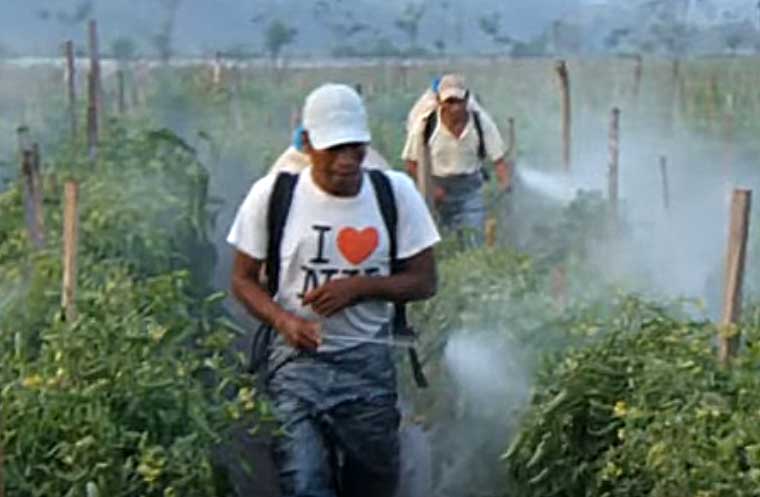
Many Canadian farmers-workers are exposed to a range of agricultural chemicals. Unlike workers in other industries, strict safety precautions are not often in place. United Food and Commercial Workers Union has teamed up with EcoJustice in a court case to require Health Canada to announce hazards and necessary protections for farming people. Lawyer Laura Bowman from EcoJustice tells us about what they are looking for.
Will Keith make it to Kelowna? Keith takes his new-to-him, low-range Electric Vehicle on a road trip. The first hump to get over: Paulsen Pass. Hear about his real world EV driving experience.
LINKS MENTIONED:
Doctors and Nurses for Planetary Health Kootenay Boundary
https://planetaryhealthkb.ca/
West Kootenay Climate Hub
https://www.westkootenayclimatehub.ca/
EcoJustice on Agricultural Workers pesticide safety
https://ecojustice.ca/news/large-workers-union-sues-health-canada-over-pesticide-safety-failures/
United Food and Commercial Workers Union report on pesticide safety
https://ufcw.ca/templates/ufcwcanada/images/Agriculture_Workers/2024/Migrant-Workers-Report-2023-V7-EN.pdf
PROTECTING THE WALKER VALLEY VALLEY 10 MINUTE VIDEO
Conservation North (Prince George)
https://conservationnorth.org/
ONE JULY EVENT
Saturday, July 5th, 2025
10:00 AM – 3:00 PM
Nelson District Rod & Gun Club Hall
NELSON REPAIR CAFÉ – FIRST EVENT JULY 5th!
Come to Nelson’s first Repair Café — a free community event where you
can bring broken items and fix them with the help of skilled volunteers!
Helping repair:
• Small furniture or tools
Want to volunteer? Visit: RepairCafeNelson.ca to sign up!
• Small appliances
• Clothing & textiles
• Bikes
• Electronics
ENVIRONMENTAL NEWS BITS
Killer whales in the Salish Sea have been observed mutually grooming each other with a type of seaweed, the first known instance of a marine animal using tools in a way that was previously thought to be the preserve of primates such as humans.
The orcas, have been biting off short sections of bull kelp and then rolling these stems between their bodies, possibly to remove dead skin or parasites. The behavior is the first such documented mutual grooming in marine animals and is outlined in a new scientific paper.
At first, the scientists thought this was a quirky one-off but then noticed this was a widespread behavior within the group, according to the paper, published in journal Current Biology.
https://www.theguardian.com/environment/2025/jun/23/killer-whales-kelp-grooming-tool-use
Mountain top removal coal mines in the historic Crowsnest Pass present a clear and present danger to downstream fish populations even decades after their closure, according to a new scientific paper funded by the government of Alberta.
The study examined the biological impact on fish from historic coal mining on Tent Mountain.It found the legacy of open-pit mining “can persist long after mining operations end,” resulting in devastating losses for fish containing some of the highest levels for selenium ever recorded in Alberta.
https://thetyee.ca/News/2025/06/02/Coal-Mines-Crowsnest-Pass-Killing-Fish/
Some corporate leaders say new anti-greenwashing legislation has had the unintended effect of dissuading companies from taking climate action. But environmental organizations and others say that’s a cop out.
Bill C-59’s changes to the Competition Act were meant to prevent companies from misrepresenting the environmental benefits of their products or practices — known as “greenwashing.” The bill also gave the Competition Bureau more power to penalize companies that can’t back up their claims with detailed evidence.
But critics say requiring all such claims conform to “internationally recognized methodology” leaves too much room for interpretation and makes companies vulnerable to legal action.
Royal Bank has “retired” its commitment to facilitate $500 billion in sustainable finance by this year, pointing to changes in the Competition Act.
https://www.cbc.ca/radio/anti-greenwashing-green-hushing-1.7562675
Inactive and abandoned oil and gas wells in Canada are a much bigger climate problem than previously thought, emitting almost seven times more methane than the official estimates, according to a new study from researchers at McGill University.
The potent greenhouse gas is responsible for a third of all global warming and traps 80 times more heat in the atmosphere than carbon dioxide. But Canada’s efforts to curb methane emissions have focused on active oil and gas sites, rather than those that stopped operating decades ago.
The McGill study says methane emissions from these wells is about 230 kilotonnes yearly, as opposed to the government’s current estimate of 34 kilotonnes.
https://www.cbc.ca/news/science/non-producing-oil-gas-wells-mcgill-1.7565725\
A new 12-person ferry – powered entirely by electricity and lifted on ‘underwater wings’ – was on public display in Victoria for the first time, part of a demonstration that could reshape how Greater Victoria commutes.
Victoria-based firms Greenline Ferries and FRS Clipper joined forces with Northern Ireland’s Artemis Technologies to bring the demo to Victoria, and hope to continue their collaboration by eventually bringing the ferries to Victoria.
The vessel uses cutting-edge hydrofoil technology that lifts it out of the water as it accelerates – a move that slashes drag, conserves energy, and delivers a ride that’s faster, quieter, and drastically more efficient than conventional ferries.
https://www.nelsonstar.com/local-news/next-gen-hydrofoil-ferry-makes-waves-in-bc-waters-8075013
After months of deliberation, the New Mexico Water Quality Control Commission voted to prohibit any discharge of treated “produced water” from oil and gas extraction to ground and surface waters.
Produced water flows back to the surface during fracking and conventional oil and gas drilling and contains chemicals used in the extraction process as well as numerous other hazardous compounds, including arsenic and benzene, both human carcinogens.
New Mexico creates around two billion barrels—84 billion gallons—of this toxic wastewater each year. Cleaning through multi-stage filtration, desalination and other processes could allow for the reuse of produced water for irrigation and other commercial applications, saving precious water resources. But environmental advocates, scientists and the New Mexico Environmental Department (NMED) have urged that proper regulations are not yet in place to make such reuse safe.
 Longest running Enviro News show on the Radio!