
LISTEN OR DOWNLOAD MARCH 25 SHOW HERE:
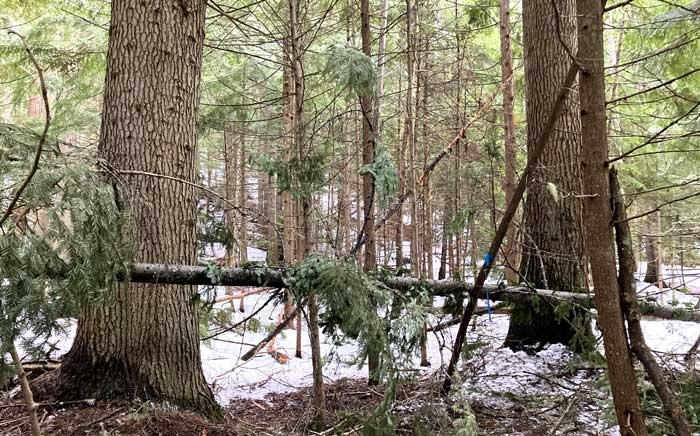
Matt Casselman from Castlegar has been working hard to have the old growth forest at Cai Creek, gives us an update on logging plans. Eriel Tchiekwe Derange from Indigenous Climate Action explains how protecting Indigenous rights and lands is important to maintaining biodiversity and climate. Economist Jim Stanford explains how artificial oil and gas prices (and profits) lpushed us into the affordability crisis.
LINKS MENTIONED
Images and information on protecting Castlegar’s Cai Creek watershed forest.
https://savecaicreek.com/
Indigenous Climate Action
founded by Eriel Tshiekwe Deranger
https://www.indigenousclimateaction.com/
Full West Coast Climate Action webinar
with Eriel Tshiekwe Deranger
https://www.youtube.com/watch?v=Cu4SaDJNcyU
What caused Canada’s affordability crisis?
Report from economist Jim Stanford
FalseProfits.ca
COMING EVENTS
Wednesday, March 26 6:30 pm
Zoom event, please register
Resilience Cafe#2 from West Kootenay Climate Hub
Soil Health contributes to local resilience
An interactive webinar “café”, diving deep into the infinitely complex and fascinating world right beneath our feet.
Our guest experts, Greg Utzig and Kelpie Wilson, will share their insights and experiences, guiding us through methods of nurturing soil health and promoting carbon sequestration in our own backyards and communities.
RSVP at: https://www.westkootenayclimatehub.ca/event-details/resilience-cafe-2-fromthegroundup
Friday, March 28th 12-2 PM
Harrop Hall Outdoor Pavilion
6066 McConnell Rd,
Crush Canary: Stopping invasive Canary Reed grass on wetlands
Friends of Kootenay Lake Stewardship Society
Friends of Kootenay Lake Stewardship Society (FoKLSS) is kicking off the season with a hands-on opportunity to support wetland restoration. Join us at the Harrop Hall Outdoor Pavilion as we prepare cardboard barriers to help control Reed Canary Grass, an invasive species threatening the Harrop Wetland biodiversity. Light snacks and beverages will be provided!
We’ll be removing tape, glue, staples, and flattening the cardboard to be used in future restoration efforts. It’s an easy but impactful way to contribute!
Sustainable Development: Speaker Series
Friday, March 28, 2025, 5:00 pm
The Pit, Selkirk College, 301 Frank Beinder Way, Castlegar
For Sustainable Development Goals (SDG) Month 2025, Sustainable Selkirk is hosting a student speaker series called Students for Sustainable Development across four campuses, highlighting talks from current or past Selkirk College students that address one or more of the SDGs.
Open to anyone in the community, attendance is by donation to support the Giving Days sustainability cause of developing applied learning projects on-campus that enhance and protect biodiversity.
Details at: https://selkirk.ca/events/students-sustainable-development?date=mar-14-2025
Saturday Saturday March 29th
Silverton Memorial Hall.
Public showing of Valhalla Wilderness Society’s latest film Safe Haven The Rainbow Jordan Wilderness.
details on VWS.org
https://www.vws.org/safe-haven-film/
Thursday, April 3, 2025
Time: 3:30 PM PT
Register for online event.
in Seniors for Climate for a special viewing of the new documentary, Later is Too Late, which captures the energy and impact of our first-ever National Seniors’ Day of Climate Action on October 1, 2024. On that day, seniors, youth, Indigenous elders, and climate activists rallied in 76 communities across Canada—from Nelson, BC to Pugwash, NS, to to Yellowknife, NT—to demand urgent climate action.
Register here: https://us02web.zoom.us/webinar/register/WN_9TmL2ytwR9Se5AwKfl_L5Q
Earth Day and Earth Week 2025.
Earth Day April 22
Earth Week April 20-27
Nelson West Kootenay Events
As Earth Day 2025 approaches, the West Kootenay Climate Hub is inviting the community to celebrate the planet by hosting events.
Community-wide events planned so far:
Saturday, April 26th Taghum Hall Earth Day Festival
Sunday, April 27th, Nelson Parade, route TBA.
More info contact EarthWeekNelson@gmail.com
ENVIRONMENT NEWS BITS
STUDY FINDS CLEARCUT LOGGING TO BLAME FOR FLOODS Study has found nearly half of the landslides, debris flows and washouts that occurred during British Columbia’s atmospheric river disaster in November 2021 originated in areas that had been logged or burned by wildfire.
Severe rains triggered a landslide that killed five people on a stretch of Highway 99 east of Pemberton, while large swaths of roads and bridges were washed away cutting off coastal B.C. from the rest of the country.
The study, published in the peer-reviewed journal Earth Surface Processes and Landforms, covered about 70,000 square kilometres in the region, examining 1,360 debris flows, landslides and bank erosion triggered by the storm.
It found 17 per cent of those hazards originated within burned areas, while 14 per cent occurred at or below roads used by resource industries and an additional 15 per cent stemmed from logging cut blocks, for a total of 46 per cent.
The study says the province has improved logging practices over the last several decades, but “the approximately 400 resource road and cutblock-related geohazards triggered by the November 2021 (storm) show that these issues persist.”
When it comes to the share of electricity from solar and wind, the Global South is growing twice as fast as the Global North.
The Global South uses five times less energy per person than the Global North. Yet, overall the South has already become a net importer of fossil fuels. The cost and risk of fossil fuel imports is rising to painful heights.
But these countries are endowed with 70 percent of the world’s renewable energy potential. This renewable resource keeps getting cheaper and cheaper, outcompeting fossil fuels on price.
Electricity has seen huge new ijnvestment. In 2024, clean sources outpaced fossil fuels by SEVEN TIMES in Global South electricity investments, compared to a 50/50 split ten years ago.
A massive carbon capture and storage pipeline in the United States faces indefinite delays after South Dakota passed new legislation preventing carbon capture companies from using eminent domain to access private land.
A 2020 carbon dioxide blowout at a pipeline in Mississippie narrowly avoided being a disaster. Carbon dioxide can smother people and animals, a natural C02 cloud from a lake killed over a thousand in Cameroon.
Summit Carbon Solutions, which proposed a 4,023-kilometre pipeline to carry carbon from more than 50 ethanol plants in Iowa, Minnesota, Nebraska, North Dakota, and South Dakota for underground storage in North Dakota, has filed an application to suspend its permit application timeline, reported The Associated Press.
Eminent domain allows the government to acquire property for public use, as long as fair compensation is paid to the property owner. The new law in South Dakota bans private carbon capture operators from using this power—the latest setback in a series of court battles for Summit and similar companies, as opposition to carbon capture pipelines unites Americans across the political spectrum.
In late February, John Deere demonstrated three battery electric prototype tractors.
Deere had three tractors to show, and like the approach taken by automotive BEV manufacturers, all are based on the same platform. They can be configured for a different application: orchard, vineyard and utility work with a front-end loader.
Electric drive makes these tractors ideally suited to autonomous operation due to the ease of controlling them via software.
The tractor has five power packs, but can operate with as few as two, so three others can be charging.
 Longest running Enviro News show on the Radio!