

LISTEN OR DOWNLOAD THE MARCH 11, 2025 ECOCENTRIC HERE:
Nelson’s Rosemont dedicated bike corridor has been stalled since it first went through planning and public meetings back in 2021. City planners Natalie Andrijancic and Sarah Shaw say its back on the agenda, along with other transportation improvements.
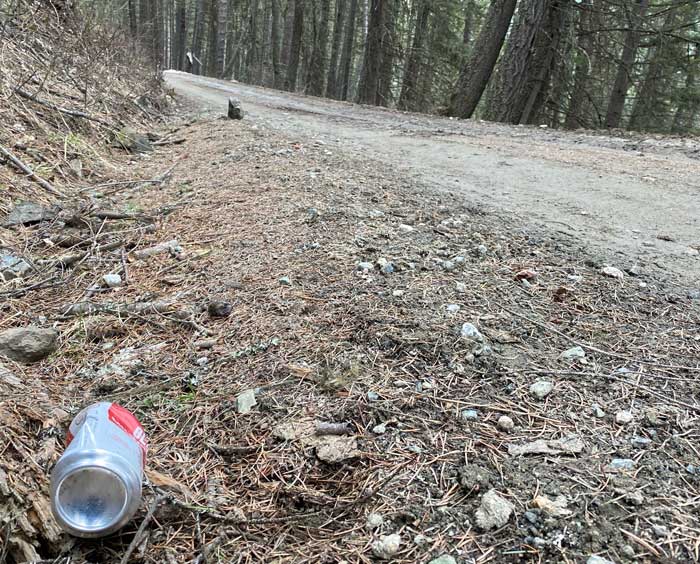
Drive up a wild country road and encounter a messy pile of garbage? Dr. Jacqueline Stoeckler from the West Kootenay Watershed says we can do more to protect the back country and watersheds.
In rural BC, most people have little choice but to run their own vehicle. That’s costly: the average Canadian vehicle’s total cost is over $10,000 a year. Venkatesh Gopal from Movmi, a Vancouver consulting firm, is an advocate of shared mobility and says we need more options.
LINKS MENTIONED:
Nelson’s Active Transportation plan is here: https://www.nelson.ca/802/Active-Transportation
West Kootenay Watership Collaborative is here: https://www.westkootenaywater.ca/
Movmi can be found here: https://movmi.net/
ENVIRONMENTAL EVENTS COMING UP
Thursday, March 13
Scouts Hall, 310 Cedar St., Nelson, BC
Cultivating Change: Strengthening Our Community through Climate Action
Event by Kootenay Native Plant Society
Speaker Series on Climate Action. The Kootenay Native Plant Society is hosting a free evening featuring dynamic speakers who will share valuable insights on how we can protect our environment, foster community connections, and support local flora and fauna.Talks from the West Kootenay Climate Hub, Rob Leland from the Interchange Wildfire Resilience Project, and Valerie Huff, Program Manager of the Kootenay Native Plant Society, discussing the Milkweed for Monarchs initiative. Starting at 6:00 PM, and doors open at 5:45 PM. Check with the Kootenay Native Plant Society on facebook to preregister.
Register at: https://www.zeffy.com/en-CA/ticketing/cultivating-change-strengthening-our-community-through-climate-action.
Friday, Mar. 14, Noon Pacific Time
Online Zoom
A Conversation with Eriel Tchekwie Deranger, 2024 Climate Breakthrough Award Winner
Eriel Deranger from Indigenous Climate Action in Alberta is launching a globally coordinated effort that will allow for the effective and resourced participation of Indigenous peoples all around the world in bringing forward climate solutions.
Register at:
https://us06web.zoom.us/meeting/register/OUaAXP-FQP2O0cgq8EsQuw#/registration
Saturday, Mar 15 7:00 p.m.
185 Columbia Ave, Castlegar
Film: Safe Haven: The Rainbow-Jordan Wilderness
Hosted by the West Kootenay Naturalists’ Association in support of the Rainbow-Jordan Wilderness park proposal, designed to protect a globally significant Inland Temperate Rainforest near Revelstoke. Two years of filming in the ancient forest led to the film, which is a call to action to protect one of our richest remaining temperate rainforest ecosystems.
The 30 minute film will be followed by a presentation by Valhalla Wilderness Society biologist and campaigner Amber Peters, including stunning photography from 8 years of expeditions.
Admission by donation (free for members of the West Kootenay Naturalists Association).
Film preview: https://vimeo.com/1050355596
Saturday, March 22nd 8:30 pm
Earth Hour 2025
Turning off everything electrical for the hour.
Last year, was Earth Hour the biggest one yet, giving over 1.4 million hours relief to our planet. This do it yourself at home event by switching off power in the house and Giving an hour for Earth by spending 60 minutes from 8:30 to 9:30 doing something good for the planet and celebrating naturally something you love. Put it in your calendar.
Wednesday, March 26 6:30 pm
Zoom event, please register
Resilience Cafe#2 from West Kootenay Climate Hub
Soil Health contributes to local resilience
An interactive webinar “café”, diving deep into the infinitely complex and fascinating world right beneath our feet.
Our guest experts, Greg Utzig and Kelpie Wilson, will share their insights and experiences, guiding us through methods of nurturing soil health and promoting carbon sequestration in our own backyards and communities.
RSVP at: https://www.westkootenayclimatehub.ca/event-details/resilience-cafe-2-fromthegroundup
Sustainable Development: Speaker Series
Friday, March 28, 2025, 5:00 pm
The Pit, Selkirk College, 301 Frank Beinder Way, Castlegar
For Sustainable Development Goals (SDG) Month 2025, Sustainable Selkirk is hosting a student speaker series called Students for Sustainable Development across four campuses, highlighting talks from current or past Selkirk College students that address one or more of the SDGs.
Open to anyone in the community, attendance is by donation to support the Giving Days sustainability cause of developing applied learning projects on-campus that enhance and protect biodiversity.
Details at: https://selkirk.ca/events/students-sustainable-development?date=mar-14-2025
Earth Day and Earth Week 2025.
Earth Day April 22
Earth Week April 20-27
Nelson West Kootenay Events
As Earth Day 2025 approaches, the West Kootenay Climate Hub is inviting the community to celebrate the planet by hosting events.
Community-wide events Planned so far:
April 26th Taghum Hall Earth Day Festival
April 27th, Nelson Parade, route TBA.
If your organization has an idea or would like to create an event, Contact: EarthWeekNelson@gmail.com
ENVIRONMENTAL NEWS
Over $2.4 million will be invested in eight new projects in the Kootenay region from the Forest Enhancement Society of BC (FESBC) to reduce wildfire risk and increase fibre supply.
The FESBC will be investing $2,446,975 in eight projects — and additional funding for three previously funded projects — to also keep local mills and energy plants running in the face of U.S. tariff threats and unjustified softwood lumber duties.
With $28 million from the province, FESBC is supporting 43 new and expanded fibre-recovery projects and 31 new and expanded wildfire-mitigation projects.
Fibre-recovery projects take wood fibre that would otherwise be burned or abandoned and put it in the hands of mills and forestry companies that can use it. That fibre would once have been burned in slash piles and is instead creating jobs and revenue for local businesses.
A coalition of environmental, health and justice groups, Ecojustice, Environmental Defence, David Suzuki Foundation, Canadian Association of Physicians for the Environment, and Breast Cancer Action Quebec, have welcomed an important first step in tackling the threats posed by forever chemicals in the federal government’s proposed class listing order of PFAS.
A federal government report concluded that PFAS meets the criteria to be designated as ‘toxic’ under the Canadian Environmental Protection Act.
The government also announced a phased approach to managing the risks of PFAS that will include prohibitions, starting with firefighting foams, followed by consumer products such as cosmetics, food packaging, and textiles, including firefighting turnout gear, and later industrial, medical and transport uses and fluorinated gases.
British Columbia, Alberta, and Saskatchewan have met their targets for reducing methane emissions ahead of schedule, though measurement methods are still evolving to correct under-reporting by the oil and gas industry.
All three provinces met their 2025 methane reduction targets from upstream oil and gas as early as 2022, finds new analysis by 440 Megatonnes. Stricter regulations and improved leak detection and other measures, have reduced the leakage of this potent greenhouse gas.
Methane is a major contributor to Canada’s carbon pollution, accounting for 17% of the national total. Almost half of that amount, 48%, is unintended or uncontrolled methane releases from oil and gas systems—pipes, tanks, and valves—also known as fugitive emissions.
The most recent inventory incorporates “top-down” atmospheric methane measurements. Independent analyses show tat this method has helped close the reporting gap.
However, one scientist noted that doesn’t mean the new inventory represents true emissions with 100% certainty.
Half of the world’s climate-heating carbon emissions come from the fossil fuels produced by just 36 companies, according to a recent analysis.
The researchers said the 2023 data strengthened the case for holding fossil fuel companies to account for their contribution to global heating. Previous versions of the annual report have been used in legal cases against companies and investors.
The report found that the 36 major fossil fuel companies, including Saudi Aramco, Coal India, ExxonMobil, Shell and numerous Chinese companies, produced coal, oil and gas responsible for more than 20bn tonnes of CO2 emissions in 2023.
If Saudi Aramco was a country, it would be the fourth biggest polluter in the world after China, the US and India, while ExxonMobil is responsible for about the same emissions as Germany, the world’s ninth biggest polluter, according to the data.
 Longest running Enviro News show on the Radio!