

LISTEN OR DOWNLOAD DECEMBER 3RD ECOCENTRIC HERE:
Nelson local Ben Simoni is the executive director of Youth Climate Corps BC and now there is a big push on to take the Youth Climate Corps program nation-wide. The Youth Climate Corps idea started here in the Kootenays and Ben tells us about what it could do nationally!
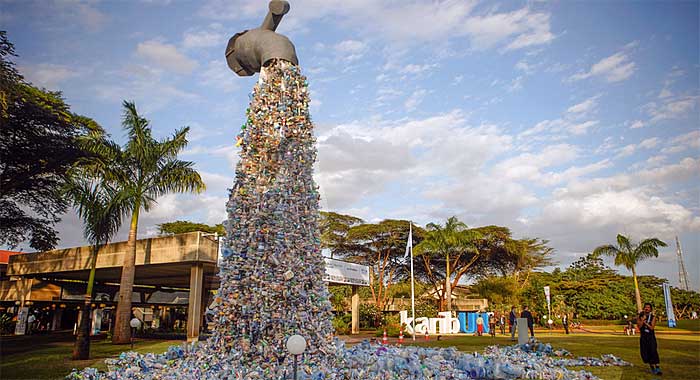
The global negotiations to control plastic pollution failed to reach a treaty in Busan Korea this week. Melissa Gorrie from EcoJustice here in Canada attended the Busan meetings and gives us a report from the conference.
Vancouver City Council narrowly voted to keep its ban on installing more methane gas heating in new buildings last week. Organizer Paige Gorsak from Dogwood BC talks about the grassroots pressure that helped keep Vancouver from back-sliding on the move to cleaner energy.
LINKS MENTIONED:
Youth Climate Corps BC
https://www.youthclimatecorps.com/
Climate Emergency Unit campaigns for national Climate Corps
https://www.climateemergencyunit.ca/climatecorps
EcoJustice on plastics pollution in Canada
https://ecojustice.ca/news/aamjiwnaang-first-nation-and-environmental-groups-disappointed-in-outcome-of-plastics-treaty-talks/
Dogwood BC’s Climate campaigns
https://www.dogwoodbc.ca/campaigns/climate/
The Narwhal.ca analysis of Vancouver decision on new gas installation
https://thenarwhal.ca/vancouver-city-hall-natural-gas-intimidating-children/
ENVIRONMENT EVENTS
Thursday, December 5, 6 pm
Webinar How to be a Good Ally as Environmentalists while Respecting Indigenous Governance With Sunny LeBourdais (Online)
From Neighbours United: Join us to explore what it means to respect Indigenous Governance as an environmentalist and environmental advocate. How do the impacts of colonization remain and manifest themselves today? How can environmental movements and organizations grow their awareness and operations to be more respectful?
Register https://us02web.zoom.us/meeting/register/tZwpd-CupzgrHNYXA_YQxPG12D-tAoIW77Wz#/registration
___________________________________________
11 AM Saturday, December 7,
Climate Solutions Café – Disinformation Detectives (Nanaimo)
From Nanaimo Climate Action Hub: Join us for an engaging, interactive workshop where you’ll learn how to spot and trace climate misinformation back to its sources. It will empower you to identify common anti-science arguments and understand how they spread, helping you effectively counter climate disinformation in your community. FREE event.
___________________________________________
6 pm Monday, December 9, 2024
Rossland City Council Sue Big Oil presentation
Rossland, 1920 3 Ave, Rossland, BC
A delegation of local Sue Big Oil members will be making a presentation to Rossland City Council, asking them to become the 10th community in B.C to join a class action lawsuit against the biggest fossil fuel polluters.
https://www.westkootenayclimatehub.ca/event-details/sue-big-oil-rossland-delegation
___________________________________________
3 pm Sunday, December 22, 2024
4th Annual Santa Bicycle Ride
Nelson, Lakeside Park,
Dust off your Santa suit or holiday outfit, put Christmas lights on your bike and join the annual Santa Bicycle Ride. $10 dollar suggested donation. All proceeds are going to Our Daily Bread. (Just $60 provides ten meals for those in need.) Children are welcome!
Sign up on the West Kootenay Cycling Coalition facebook page.
___________________________________________
ENVIRONMENT NEWS BITS
As a result of Russia’s deliberate attacks on Ukraine’s energy system, Ukraine is on the edge of a nuclear crisis, unprecedented in the history of nuclear power, says Greenpeace. If Russian attacks continue on the electricity system, there is a very real prospect of simultaneous and multiple emergency failures at Ukraine’s nuclear reactors with the release of catastrophic levels of radioactivity from the reactor cores and spent fuel pools, says the Greenpeace report.
In the worst-case scenario each of the existing thirty large sources of radioactivity in Ukraine could lead to radiological consequences beyond the total release from Fukushima Daiichi and even the disaster in Chornobyl and its radiological impact.
Project 2025, the Heritage Foundation’s conservative blueprint for the future, offers some strong hints that cleanup plans for the US’s most polluted nuclear site might change with or without the approval of the Washington Department of Ecology.
The Hanford nuclear site on the Columbia River in southern Washington stores immense amount of wastes dating back to WWII.
One Project 2025 idea recommends reclassifying highly radioactive wastes into something less dangerous so cheaper methods can be used to dispose of them.
Arguably the most radioactively and chemically contaminated spot in the Western Hemisphere, the Hanford nuclear reservation’s cleanup is governed by a 35-year-old legal agreement called the Tri-Party Agreement. The state of Washington sometimes pushes foot-dragging U.S. Department of Energy to meet its legal standards and schedule to clean up the highly radioactive site.
Most Canadians still don’t know about the risks associated with benzene exposure from the gas stations on their own streets.
Any level of benzene exposure can cause adverse health effects. In short-term bursts, breathing benzene can cause dizziness, irregular heartbeat, headache and tremors. But, in the long term, benzene causes leukemia and other blood cancers, especially in children, babies and pregnant people. Childhood leukemia is an acute risk.
Since 2019, international public health studies have found gas station workers are at increased risk of cancer. One study showed a high risk of health issues in 51 per cent of workers; over 71 per cent of workers had a lifetime cancer risk compared to an average of 42 per cent in the overall population. Significantly higher risk was found in fuelling workers compared to cashiers, and in city workers compared to rural.
Canadians widely recognize the importance of nature in supporting life and habitats, but fewer see its direct connection to their personal physical and mental well-being, a new survey reveals.
Last summer, EcoAnalytics worked with Environics on a National Biodiversity Survey, with a robust sample of 1,517 respondents. Like other research on support for biodiversity protection, the survey found that Canadians overwhelmingly think nature is important, but the awareness of issues and solutions highlights a few areas to better educate and connect.
175 countries trying to negotiate binding treaty on plastic pollution in South Korea
As 175 countries negotiate a binding treaty on plastic pollution in Busan, South Korea, why is recycling still seen as a way to stop this pollution crisis?
Plastic producers and the fossil fuel companies that provide the necessary petrochemicals see a demand for products and only support a solution that won’t hinder meeting that demand. In a statement, the Chemical Industry Association of Canada — which is present at the current negotiations — said it supports “an agreement that has plastics circularity at its core, so used plastics are reused and remade, rather than discarded.”
It’s worth noting that investigations (one by NPR and PBS, the other by the Center for Climate Integrity) have revealed internal documents going back decades suggesting the industry knew that recycling was never going to work, but pushed it as a solution to avoid plastic bans. The industry denies misleading the public.
The world is actually making more plastic. Production has skyrocketed in recent decades, with “the annual production of plastics … soaring from 234 million tonnes (Mt) in 2000 to 460 Mt in 2019,” according to the Organization for Economic Co-operation and Development.
https://www.cbc.ca/news/climate/recycling-plastic-pollution-production-busan-treaty-1.7394438
 Longest running Enviro News show on the Radio!