

LISTEN OR DOWNLOAD SEPTEMBER 3 SHOW HERE:
Local forest watcher Joe Karthein updates us on local clear cut plans. He offers us some reflections on the politics of forestry as we head into the election. Greg Amos with the local wing of the SueBigOil.ca campaign tells us he’s going to Nelson City Council for support, September 24th. The West Kootenay Cycling Coalitions dream of a Nelson-Castlegar trail has been fleshed out with a detailed plan. Solita Work tells us about it and about presenting to the Regional District of the Central Kootenay Board on Thursday, September 12th.
LINKS MENTIONED:
FORESTRY ACTION IN SEPTEMBER
https://www.evergreenalliance.ca/forest-news/44/
https://boundaryforest.org/pof/
THE BC SUE BIG OIL CAMPAIGN IN NELSON
https://suebigoil.ca/
PLAN FOR A NELSON-CASTLEGAR BIKE AND HIKE TRAIL
http://westkootenaycycling.ca/
EVENTS LISTING
9 am Thursday, September 12, 2024.
Regional District of Central Kootenay Board Meeting
West Kootenay Cycling Coalition proposal for a Nelson Castlegar trail.
http://westkootenaycycling.ca/
Noon, Tuesday, September 24th.
Transform BC Timber Sales
Province Wide Rallies, 10 locations
Sponsored by a range of grassroots groups
https://www.facebook.com/groups/112448784208736/
Noon Tuesday, October 1
Seniors for Climate Canada-wide event
More details coming on local events soon.
https://seniorsforclimate.org/
7 pm Thursday, October 3rd
Public Election Forum on Climate, Forests and the Environment
Nelson United Church 602 Silica St. Nelson.
All candidates for Kootenay Central riding invited.
Sponsored by West Kootenay Climate Hub, Doctors and Nurses for Planetary Health Kootenay-Boundary and the Nelson West Kootgenay Chapter of the Council of Canadians.
Noon to 3 pm Saturday October 5
Power of Forests Event
The Adventure Hotel, 616 Vernon St, Nelson
With: Rachel Holt, Jennifer Holt, Joe Karthein
https://www.evergreenalliance.ca/forest-news/44/
https://boundaryforest.org/pof/
ENVIRONMENT NEWS BITS AND LINKS
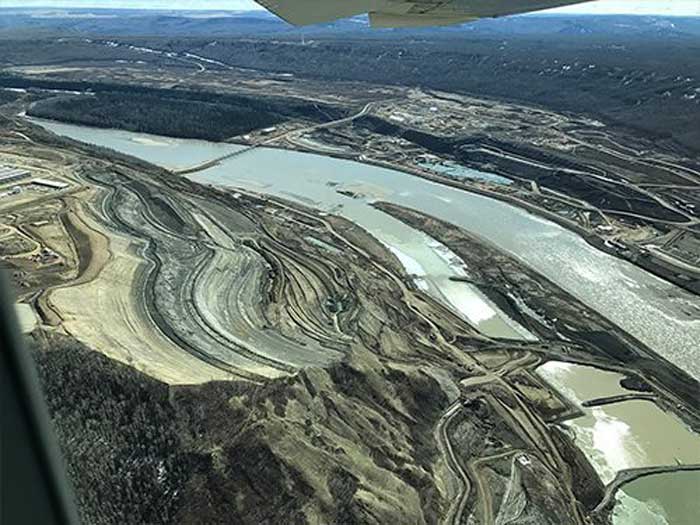
BC Hydro says it has begun filling the reservoir created by the massive Site C dam project in northeastern British Columbia.
BC Hydro said it will take between two and four months to fill the 83-kilometre-long reservoir, which will cover about 5,550 hectares of land while totalling about 9,330 hectares in surface area.
Dam opponent Ken Boon is now watching his family farm be gradually flooded, and he is talking about the toll it has taken on him as he fought the project over a decade. He remains concerned for the environment due to the dam.
The utility is warning people to stay away from the area of the reservoir for at least a year after it has been filled, citing possible unstable terrain and floating debris as potential hazards.
https://www.cbc.ca/player/play/video/9.6497729
Opposition to yet another pipeline in northern BC stepped up in recenty weeks. Tribal protectors representing members of four Nisg̱a’a villages set up a blockade last week to stop pipeline vehicles from proceeding past the village of Gitlax̱t’aamiks (formerly New Aiyansh) to where a work camp is being built to support construction of a major natural gas pipeline — Prince Rupert Gas Transmission (PRGT) — in northern B.C. The blockaders reopened the road after members of the RCMP arrived at the location.
That blockade, about 100 kilometres north of Terrace, was the second direct action in a week. The week before Gitanyow Hereditary Chiefs set up a blockade at the eastern end of the remote road where it meets Highway 37. They burned a 2014 agreement the chiefs signed with Calgary-based pipeline company, TC Energy, in support of the project, saying the project’s environmental assessment is outdated. That blockade remains in place.
https://thenarwhal.ca/prgt-pipeline-opposition-intensifies-nisgaa-blockade/
Alberta’s Court of Appeal ruled this week that the Alberta Energy Regulator’s decision to turn a dead mining project — one rejected by regulators and the courts — into an “advanced coal project” is highly questionable and possibly an error in law.
A successful appeal would kill those exploratory licenses which are currently set for a public hearing in early 2025.
It would also end the attempts by Rinehart and Smith to resurrect the controversial project which a majority of rural residents view as a threat to water security in arid southern Alberta.
https://thetyee.ca/Analysis/2024/08/29/Alberta-Highest-Court-Jams-Smith-Coal-Plans/
The Narwhal.ca has a report showing that there were about 170 illegal forest cutting or destruction infringements between January 2021 and July 2024. Companies either cut, damaged or destroyed forest — or removed timber from the forest — without provincial authorization, according to B.C.’s compliance and enforcement database. (The database does not include incidents prior to 2021.)
Canfor, in some cases listed as Canadian Forest Products Ltd., was named in 22 incidents, while West Fraser Mills Ltd. was named in 13 incidents.
Few details are publicly available about these incidents and the B.C. government couldn’t say exactly how much forest has been lost. Neither would the ministry disclose any details about any action it took in cases where it alleged Canfor harvested without authorization, instead directing The Narwhal to file another freedom of information request.
https://thenarwhal.ca/bc-logging-without-authorization/
The wildfires that ripped through Canada’s boreal forest last year produced more carbon emissions than the burning of fossil fuels in all but three countries, a new study has found.
The study, published Wednesday in the scientific journal Nature, calculated that, at 647 megatonnes, the carbon released in last year’s wildfires exceeded those of seven of the ten largest national emitters in 2022.
Only India, China and the United States released more carbon.
“The carbon emitted by fires in Canada was far outside the previous record,” said Brendan Byrne, an atmospheric scientist at NASA and the lead author of the paper.
The study concluded that widespread hot and dry weather was a principal driver of the fires spreading.
https://www.cbc.ca/news/climate/wildfire-emissions-country-totals-1.7307324
Namibia’s government is planning to cull some 700 wild animals, including elephants and hippos, in an effort to provide meat to people facing hunger, as the country copes with a historic drought.
Nearly half of Namibia’s population of 2.5 million people is facing food insecurity amid the worst drought conditions to hit the arid southern African nation in 100 years.
Food crop and livestock production have been affected and, according to the United Nations last week, 84 per cent of the country’s food reserves have been exhausted.
The Ministry of Environment, Forestry and Tourism will contract professional hunters and safari outfitters to carry out culls in areas where game numbers are sustainable, including national parks.
“This exercise [is] necessary and is in line with our constitutional mandate where our natural resources are used for the benefit of Namibian citizens,” the environment ministry said in a press release Monday.
Among the animals to be killed are 83 elephants, 30 hippos, 60 buffalos, 50 impalas, 100 blue wildebeests, 300 zebras and 100 elands, the second-largest species of antelope.
https://www.cbc.ca/news/world/namibia-drought-elephants-hippos-meat-1.7307523
 Longest running Enviro News show on the Radio!