

LISTEN OR DOWNLOAD THE JANUARY 23 SHOW HERE:
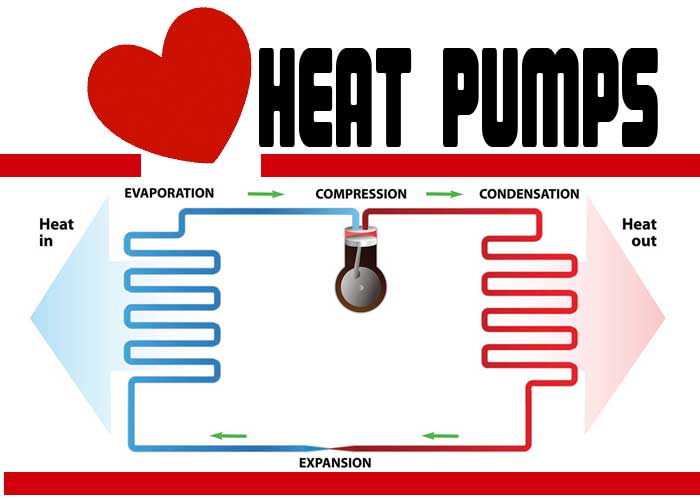
Nelson Hydro’s manager Scott Spencer explains why we hit a new peak power record during the cold snap and why it’s going to cost us more. Can we switch to heat pumps? How much power can we rely on in the future as we electrify more and more of our home heating and vehicles?
We all see the big tree logs streaming steadily through Nelson on the logging trucks. It doesn’t seem there is any problem getting big trees to cut, even though we are talking about protecting old growth forests. But increasingly these trees are coming from forests right in our backyards. Local Joe Karthein tells us about logging plans just above Beasley and Sproule Creek.
LINKS MENTIONED IN THE SHOW:
Nelson Hydro rates and peaks. http://www.nelson.ca/218/Nelson-Hydro
Details on Alberta’s cold snap electricity crisis: https://www.cbc.ca/news/canada/calgary/alberta-electrical-grid-emergency-decarbonization-1.7083664
Joe Karthein’s video of the extent of the logging that has already occurred here as of September 2021
https://www.youtube.com/watch?v=ODQ7JvZo8RM
A map the proposed logging: https://www.for.gov.bc.ca/ftp/TKO/external/!publish/FSP/Operating-Plans/Operating%20Plan_2023_Sproule_Rixen_Kootenay_Lake/Map/Sproule_Rixen_2023_Referral_Map.pdf
BC Timber Supply and Forestry officials to write to about proposed new cutblocks:
George.Edney@gov.bc.ca
Warren.Picton@gov.bc.ca
Anna.Tobiasz@gov.bc.ca
Joe suggests copying our MLA on all the emails. Brittny.Anderson.MLA@leg.bc.ca
EVENTS
Thursday, Jan 25 7PM
ONLINE
First Things First Okanagan: Deep Dive Discussion #27. Mobilizing Your Community for Change
Strong Towns presenter Norm Van Eeden Petersman
Strong Towns is an organization advocating for cities of all sizes to be safe, livable, and inviting. Their motto is, “Your community needs you to be an effective advocate for change. We can help you get there.”
https://us06web.zoom.us/meeting/register/tZwvd-qrqzIoG9yeJGBe1HprhIhW3PudlL48#/registration
Friday, February 9th. 6 pm
Hall Street Plaza
Deep Sea Dreamscape Parade & Group Ride
Are you feeling stuck indoors due to the cold winter weather? Check out The Polka Dot Dragon Lantern Festival – a free community-based event that brings people together to make and experience festival art in mid-winter. Whether you are an artist, a cyclist, or resident at large, get out and experience the magic, be a part of the festival
Ride in the Polka Dot Dragon Lantern Festival Parade on Friday, February 9th. Decorate your bicycle with lights, lanterns and more, wear a costume and join the Deep Sea Dreamscape Parade floating down Baker Street. Meet at Hall Street Plaza at 6 pm.
Saturday February 10th 4:30 pm.
Group Ride West Kootenay Cycling Coalition
Meet at Railtown Visitor Centre
Join our frosty yet fun group ride to Lakeside Park on Saturday, February 10th. Meet at the Nelson Visitor Centre, Railway Station at 4:30 pm, ride departs at 5:00 pm. Try winter riding during Go By Bike Week with your neighbours and be a part of the festival at Lakeside Park!
https://westkootenaycycling.ca/events
📅February 13, 2024, 7-8:30 PM
📍Nelson and District Rod and Gun Club, 801 Railway St.
Cottonwood Creek Revival
The goal of the Cottonwood Creek Revival (CCR) Project is to assess the condition of the creek and explore opportunities that could improve the health of the creek in the long term.
Join Living Lakes Canada, Friends of Kootenay Lake Stewardship Society and the Nelson District Rod Gun Club and Conservation Society for a public meeting about the CCR project. Findings from a recent technical report will be discussed and community members will be able to share their concerns during an interactive session.
Thursday February 15th, 6:30pm-8:30pm
Climate Action Provincial Assembly (CAPA)
Online
From WE-CAN: By joining our 6th Climate Action Provincial Assembly you will be able to: (1) Hear ten of BC’s most effective climate leaders with their five-minutes answers to this question: “What are the three most effective things climate action groups and organizations can do to accelerate progress in BC’s climate movement?” (2) Participate in a break–out group with other climate activists to consider the speakers’ ideas, and ask how they might apply to the work of your climate action group. (3) Take their answers back to your group, and consider if you can use them to build a more integrated and powerful climate movement. WestCoastClimateAction.ca Details here
A reminder that January 31 is the deadline for input into
B.C.’s Biodiversity and Ecosystem Health Draft Framework
Activists say the can be an important step in the provincial government’s commitment to prioritize the conservation and management of ecosystem health and biodiversity.
The new Framework will align all existing related initiatives, and set the path for co-development, and the implementation of new policies, legislation, and strategies. This is your time to wade in! From Organizing for Change (OfC): has done a Technical Briefing, which you can find here. Our slides are here. When you are ready, make your submission here, and send a copy to us here. Reach out if you need anything, and we will try to help. Read more
ENVIRONMENT NEWS FOR JANUARY 23 2024
On Sunday January 21 the Parkland fuel refinery in Burnaby had a major leak at one of its processing units releasing of gases that were blown east and created a giant stink over much of Vancouver.
This came five days after Delta mayor George Harvey slammed FortisBC’s response to a leak at its Ladner natural gas plant that covered his community and led to several calls to Delta’s fire and police agencies.
According to a March 2022 report by WSP Golder titled Parkland Burnaby Refinery Human Health Risk Assessement Study Results, key contaminants of concern that could be emitted at the refinery are sulphur dioxide, benzene and butadiene. Benzene and butadiene are carcinogenic.
An air quality bulletin was issued for the northeast and northwest of Metro Vancouver, warning residents to move inside if they smell odour and to close their windows. Unhealthy air was reported in Strathcona in Vancouver.
In Vancouver’s False Creek area, “there’s enough heat in the sewerage system to literally heat up neighbourhoods,” Derek Pope, neighbourhood energy manager for the city, told the BBC recently. The recently-redeveloped False Creek neighbourhood has been harnessing that heat since 2010.
Vancouver owns and operates the False Creek Neighbourhood Energy Utility, which uses an 8.3-kilometre pipe network to distribute recovered heat from wastewater back into 44 buildings.
“In each building, heat exchangers transfer heat out from the closed-loop water system into the buildings’ heat system and domestic hot water pipes, then cool water recirculates back to the energy plant,” Pope explained.
Sewage water from homes carries heat from its initial uses—whether as hot water from a shower, a dishwasher, laundry, or otherwise—that is lost as it goes down the drain. But some cities are starting to recover that heat and use it as an energy source.
Falling prices of critical minerals will lead to a 40% drop in the cost of batteries for electric vehicles by 2025, with big implications for the pace of global EV adoption, says Goldman Sachs Research.
Battery pack prices are expected to drop an average of 11% each year from 2023 to 2030. By 2025, the EV market could achieve cost parity with internal combustion engine (ICE) vehicles, the team found—without subsidies.
Analysts estimate that nearly half the decline will come from falling prices of EV raw materials such as lithium, nickel, and cobalt.
Internal documents from the Alberta Energy Regulator (AER) suggest the province’s environmental liability for hundreds of thousands of oil and gas wells could be nearly triple the figure the agency announced earlier this week.
In a report released last Wednesday, the regulator said the cost of cleaning up the province’s 466,000 wells would be C$33.3 billion, The Canadian Press reports. That figure is derived partly from estimates of what it would cost to remediate individual wells in different areas of the province, contained in a 2015 document called Directive 11.
The documents suggest that for the boreal region, Directive 11’s estimates are 65% too low. In the parkland, they’re 173% short. Costs for the province’s foothills region were underestimated by 334%, and the figure for the alpine was 675% shy.
The reality of climate change can no longer be refuted, so climate deniers have pivoted to new types of misinformation, and they are reaching scores of young people on online video platforms like YouTube.
Departing from “Old Denial” that claimed anthropogenic climate change is not happening and that greenhouse gases are not causing it, spreaders of “New Denial” now say the impacts of global warming are beneficial or harmless, that climate solutions won’t work, and that climate scientists and the climate movement are unreliable. That’s what researchers at the Center for Countering Digital Hate (CCDH) are reporting. “New Denial constitutes 70% of denialist claims in 2023, up from 35% in 2018.”
Frontline fishers and environmental justice advocates forced the meeting of the Americas Energy Summit in New Orleans to end two hours early on Friday, as they protested what the buildout of liquefied natural gas infrastructure is doing to Gulf Coast ecosystems and livelihoods.
Fishers and shrimpers from southwest Louisiana say that new LNG export terminals are destroying habitat for marine life while the tankers make it unsafe for them to take their boats out in the areas where fishing is still possible.
https://www.commondreams.org/news/fishers-force-early-end-to-gas-conference
A British Columbia wildlife protection group says tens of thousands of chinook salmon are being dumped overboard or turned into compost by a commercial fishery that is threatening a primary food source of threatened southern resident killer whales.
Pacific Wild says it has obtained a recent Fisheries and Oceans Canada report on the groundfish trawl fishery that shows more than 26,000 chinook were netted as bycatch during the 2022-2023 commercial fishery.
The group says the report estimates more than 20,000 chinook caught in the nets were dead and thrown overboard while another 3,700 were either discarded as offal, waste or compost.
 Longest running Enviro News show on the Radio!