
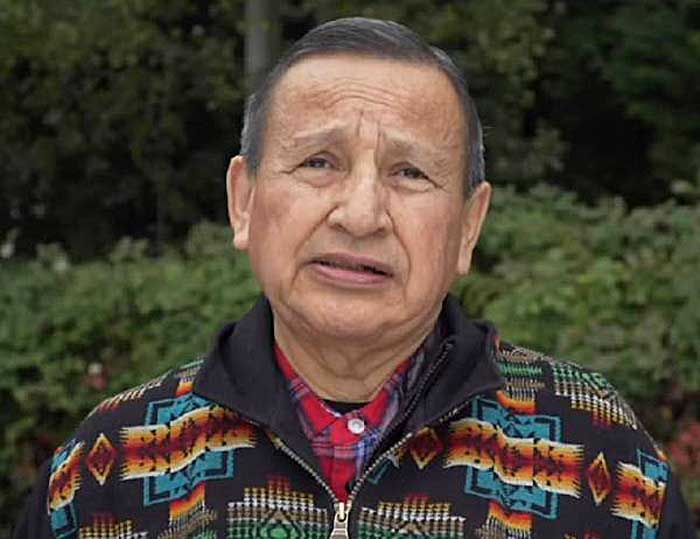
The Union of BC Indian Chiefs hosted a major media event to respond to the BC government logging plan. Nelson’s Dr. Rachel Holt was one of the speakers on the logging changes, and we have short speeches from several other participants as well, including Grand Chief Stewart Phillip.
I have often heard people slag the whole consumer recycling thing by saying, most of it ends up in the dump anyway. Not so, says Travis Barrington who works on recycling for the Regional District of the Central Kootenay. He gives us more details on today’s show.
LISTEN OR DOWNLOAD DECEMBER 7 SHOW HERE:
ENVIRONMENT NEWS AND EVENTS
The B.C. government and its logging agency BC Timber Sales (BCTS) has announced they have pulled three more cutblocks from their sales plan in Argonaut Creek, on the traditional territory of the Ktunaxa, Syilx, Secwépemc and Sinixt nations.
The Argonaut Creek logging was one of the targets of the Revelstoke Revuylution group who have been blockading logging roads in the region.
Since last year fourteen cutblocks have been taken off the chopping block. All but two are in core critical habitat for the at-risk North Columbia caribou herd.
A total of 339 hectares of proposed logging and more than 10 kilometres of a new road will be halted. One cutblock is still left.
During recent campaigns more than 3,000 letters were sent to government and BCTS decision-makers calling for the cancellation of the logging in Argonaut Creek. In the winter of 2020, B.C. announced they would temporarily halt 11 of the 15 cutblocks.
_______________________________
The bee-killing pesticide sulfoxaflor is no longer approved for use in California after a ruling by a state superior court. Environmental advocates say represents a win for bees, pollinators and the American food system.
“just about every commercial honey bee colony in this country spends at least part of the year in California,” said Steve Ellis, president of the Pollinator Stewardship Counciil.
They called the ruling “incredibly important for pollinators” because “removing systemic insecticides such as sulfoxaflor will help ensure honey bees have a healthy future.” That’s especially crucial, he said, in light of recent “astounding losses” to honey bee colonies.
_______________________________
Gitxsan leaders say MLA Nathan Cullen is no longer welcome on their territory after he failed to meet them to discuss the deployment of RCMP officers at an encampment at a railway line in New Hazelton, B.C.
Members of the Git’luuhl’um’hexwit (Gil lu lum hex wit) House traditional leadership are the latest to sign an eviction notice posted on the Cllen’s MLA’s office. The notice says MLA Cullen has failed to ensure the safety of Gitxsan and Wet’suwet’en peoples and failed to represent their causes and concerns in the legislature.
The Office of the Gitxsan Hereditary Chiefs posted the notice a week ago on Cullen’s Hazelton, B.C., office, which is on the traditional territories of the Frog Clan of the Gitxsan Nation.
It followed the release on social media of a video showing an arrest near the encampment in the northern B.C. community, in which four officers are seen on top of a man who is shouting that he can’t breathe.
https://www.cbc.ca/news/canada/british-columbia/gitxsan-cullen-eviction-1.6268239
_______________________________
Emaciated bears and dwindling salmon stocks have prompted
The Mamalilikulla (mama lili kulla) First Nation onis putting into action a conservation plan to protect part of its traditional territory.
The nation has declared an Indigenous Protected and Conserved Area (IPCA) in the Gwa̱xdlala/Nala̱xdlala (Lull Bay/Hoeya Sound) area — located up Knight Inlet on B.C.’s Central Coast.
The inlet off the northeast coast of Vancouver Island near Campbell River is home to a unique sponge and coral reef, estuaries and salmon bearing streams.
Frances Roberts, the Mamalilikulla marine and lands co-ordinator, says about a year and a half ago, the First Nation hired a bear biologist to assess grizzlies in the area.
“[They] alarmed us to the point that we knew we needed to get something done, needed to protect them and needed to help them because they were dying.”
https://www.cbc.ca/news/canada/british-columbia/mamalilikulla-first-nation-protected-areas-1.6267328
_______________________________
The British Columbia government authorized an RCMP request for increased police presence on Wet’suwet’en territory to crack down on pipeline resistance for the third straight year, according to the Mountie who planned the operation.
As catastrophic floods and mudslides ravaged other parts of the province, an RCMP tactical unit equipped with choppers, snipers, assault rifles and dogs spent two days dismantling blockades erected to assert Wet’suwet’en title and oppose the Coastal GasLink pipeline near Houston.
The decision was made before the destructive extreme weather hit, according to Chief Supt. John Brewer, who said the force met its commitments to the flood response in any case.
Brewer, is the gold commander for the Community-Industry Response Group. He said “The operation was being planned to open up that road before the floods hit.”
Brewer confirmed that Mike Farnworth, deputy premier and solicitor general, granted the request to beef up forces on the territory by declaring an emergency under Article 9.1 of the Provincial Police Service Agreement, a 20-year deal between B.C. and Ottawa through which the federal cops enforce provincial laws.
_______________________________
Canada’s new climate accountability law is starting off with a delay in planning. An oil and gas emissions cap, reduced methane emissions, zero-emission vehicles, and a net-zero power grid are now going to public consultation, after Environment and Climate Change Minister Steven Guilbeault announced a three-month delay in publishing the federal government’s carbon reduction plan under the new law.
_______________________________
Former Toronto mayor David Miller is saying the city now has to turn pledges into real climate action.
Miller says Too many national governments, including Canada’s, continue to talk big but walk small on climate action. He says cities which globallly create about 70% of emissions have to move ahead on action.are stepping up, writes
Miller, is now director of international diplomacy for C40 Cities.
Miller says, So far, too much of the TransformTO Net Zero report directs staff to “report back,” in what he calls a “recipe for delay and inaction.” That means it’ll be up to councillors to show leadership and translate the pledges in the report “into immediate action.”
_______________________________
Wildfires have produced a record amount of carbon emissions in some parts of the world this year, according to the European Union’s Copernicus Atmosphere Monitoring Service.
Fires in the western US, Siberia, and Turkey were among those that the service described as proof that climate change is fanning blazes of unusual intensity.
Yakutia, in northeastern Siberia, produced its highest CO2 emissions from wildfires since 2003, and in western Siberia a huge number of fires emitted daily CO2 counts that were far above average.
Fires in the west of the US emitted around 83 million tonnes of CO2, with California’s Dixie Fire being the largest in the state’s history.
Some 1.76 billion tonnes of carbon were emitted by fires globally during the year – more than double the annual CO2 emissions from all sources in Germany.
_______________________________
Last month journalists Amber Bracken and Michael Toledano were arrested at gunpoint while documenting the ongoing Indigenous land defence in unceded Wet’suwet’en territories.
Though the RCMP precisely knew the identity of Bracken and Toledano, militarized police handcuffed the photojournalist and filmmaker alongside a number of Indigenous land defenders, and put them behind bars for three days.
Bracken and Toledano tell their story in a recent interview on breachmedia.ca.
Amber Bracken: It’s pretty disorienting to be released from jail in essentially your underwear, five hours from where the rest of your belongings are. So I spent several days just trying to reorient myself and just literally track down my belongings. And I had to dig one bag of my things out of a snowbank where it had been unceremoniously deposited by Coastal GasLink workers after they cleared Coyote Camp. So they scooped everything up with heavy machinery and dumped it into dump trucks and put it at the bottom of the mountain. So I was able to find my bag, but it’s very muddy, and very wet and pretty damaged. But anyways, here I am, I’m glad to be here—it feels good to be free.
 Longest running Enviro News show on the Radio!