
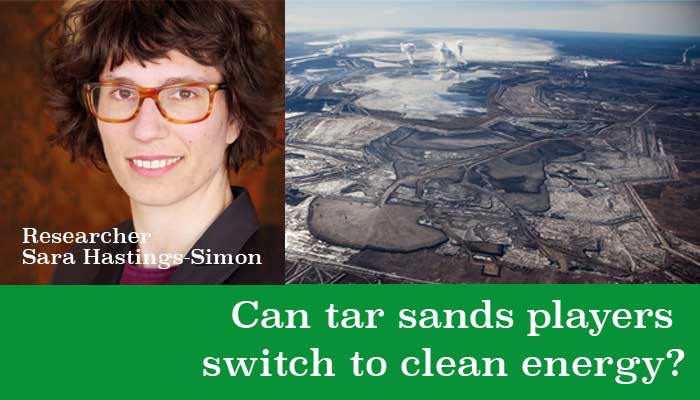
The Canadian government is still talking about doubling the size of the TransMountain pipeline, though not much is happening. But out of the University of Calgary a researcher is saying the Alberta oil patch is starting to consider other options than constant tar sands expansion. We speak with Sara Hastings-Simon about the glimmer of light in our neighbouring province.
Local communities in the West Kootenay have long been concerned about clear cutting in our forests and watersheds, over the last couple of years, Jessica Ogden has been a prominent activist against uncontrolled logging. She’s stood on many logging roads and spent over a week in jail for her efforts. She and several others are also facing a civil law suit from Cooper Creek Cedar.
Listen or Download the full show here:
Environment News for July 21, 2020
The country of Mexico recently announced its going to phase out Monsanto’s Round-up. The country’s Environment Ministry said they will gradually reduce the amount of glyphosate farmers are allowed to use, until it is completely phased out in 2024.
Glyphosate is the main ingredient in Monsanto’s Roundup herbicide, and one of the most controversial chemicals in the world. There are thousands of lawsuits claiming glyphosate causes non-Hodgkins lymphoma.
Farmers and landscapers who use the weedkiller are the most exposed, but almost all of us consume trace amounts of glyphosate residue left on our grains, fruits and veggies and secondhand through meats and dairy.
________________________________________
Russia’s arctic region is suffering a second major fuel spill this year. Authorities have announced a state of emergency following a fuel spill by a subsidiary of the mining company Nornickel, the second in three months.
About 44 tonnes of aviation fuel leaked from a pipeline operated by the company into an unnamed lake spread over about 600 square metres according to a statement by the town of Tukhard on Monday.
In May, an estimated 20,000 tonnes of diesel leaked from a tank at a thermal power plant operated by Nornickel near Norilsk.
________________________________________
In the United States, Democratic presidential candidate Joe Biden has unveiled an economic recovery plan that would see $2 trillion invested in clean energy projects over four years.
Biden’s plan calls for new infrastructure projects, investments in electric cars and zero-emissions public transportation, an end to carbon pollution in U.S. power generation by 2035, a new Civilian Climate Corps and more.
The youth-led Sunrise Movement labeled it “a major step forward”. Previously, the youth-led organization had endorsed Bernie Sanders for president on the grounds of climate policy.
________________________________________
Even as Joe Biden jumps aboard the environmental policy wagon, US President Donald Trump is doubling down on rolling-back critical environmental protections.
On Wednesday, Trump unveiled a major overhaul of the National Environmental Policy Act, a Nixon-era law designed to protect the environment when issuing infrastructure permits.
This comes as part of the Trump administration’s ongoing campaign to gut the EPA and environmental regulations, which it argues slows down fossil-fuel projects and negatively impacts economic growth.
Despite dire warnings from the scientific and international community, a new report finds the Trump administration is drastically underestimating the economic costs of climate change.
The report by the Government Accountability Office, Congress’s nonpartisan investigative arm, said the Trump administration estimated the harm that global warming will cause future generations to be seven times lower than previous federal estimate. Trump has infamously promoted climate conspiracy theories and appointed climate-deniers to positions of power in federal agencies.
________________________________________
Hundreds of prominent environmentalists and human rights activists have signed an open letter demanding a halt to all investments in fossil fuel exploration and extraction, and an immediate end to all fossil fuel subsidies.
The letter was written by Greta Thunberg, Luisa Neubauer, and others, and signed by Nobel laureates Malala Yousafzai, Nadia Murad, and Beatrice Fihn.
The letter is also calling on member states of the International Criminal Court to make “ecocide” an international crime.
The community of Mackenzie, BC is reeling with job losses from forestry. Two sawmills have been temporarily closed or working at reduced capacity and the pulp mill announced it will be laying 250 people off shortly.
Feeling some heat, Premier John Horgan set up a meeting with the Council of Forest Industries. Horgan told the media he talked tough, demanding the companies start addingmore value-added production from the dwindling timber supply.
But as columnist Vaugh Palmer pointed out in the Vancouver Sun, the day after Horgan’s meeting, Canfor announced the purchase of three sawmills in Sweden via its Vida Group subsidiary. The Canfor sawmill in Mackenzie is still closed.
________________________________________
A government-sponsored wolf kill in Western Canada has had “no detectable effect” on reversing the decline of endangered caribou populations, a new study reports. Researchers from the Raincoast Conservation Foundation and the universities of Alberta, British Columbia, and Victoria found statistical flaws in an influential 2019 report supporting a wolf cull.
The new research, published in the international journal Biodiversity and Conservation, found that addressing potential threats from wolves did not slow the loss of mountain caribou in B.C. and Alberta.
The report says factors affecting population decline include loss of habitat to logging, snowpack variation and snowmobiling.
Wolves and caribou have co-existed, interacting predators and prey, for millennia in western North America, said Chris Darimont, co-author on the study. But when new roads are pushed into caribou habitat it makes wolf pack access far easier… and more caribou disappear.
________________________________________
And in Kootenay News, B.C. is removing the “recreational trail” designation from a 67-kilometre stretch of the Columbia and Western Trail between Fife and Castlegar.
The province says that it is leaving the maintenance of the rail trail corridorto logging companies. The companies plan to use the rail grade as an access route to cut blocks. The change reclassifies the stretch as a resource road, opening the way to logging trucks.
The Trail Times reports that a spokesperson for the Ministry of Forests, Lands and Natural Resource Operations ways 20 of the 67 kilometres are currently under road permits with companies, with another six kilometres likely to be added. The remainder, they said, would remain “non-status for the time being.”
 Longest running Enviro News show on the Radio!