

The City of Nelson announced it is taking over the operation of local farmers markets from The West Kootenay EcoSociety. EcoSociety Executive Director Montana Burgess says they were blindsided by the city’s decision. Nelson City councillor Rik Logtenberg lays out his point of view. Behind everything the pandemic is still the tremendous change in our society…. and the debate of how we will change carries on. A huge grouping of Canadian civil society organizations from the Canadian Labour Congress to the David Suzuki Foundation is calling for a JustRecoveryForAll.ca. I speak with Sonia Theroux from LeadNow about the unifying statement.
Listen to the Full show here:
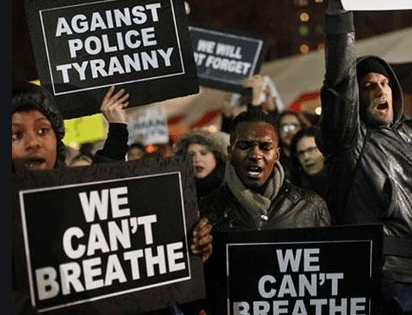
Read also Keith’s Editorial: I can’t breathe!
The Environment News for June 9 2020
Atmospheric carbon dioxide levels have reached a three-million-year high, at 417.1 parts per million (ppm), according to annual measurements at the atmospheric research lab at Mauna Loa, Hawaii.
The new figures, published by the U.S. National Atmospheric and Oceanic Administration (NOAA), capture the annual peak in CO2 levels at the end of May, and reflect a 2.4 ppm increase over 2019, The Associated Press reports. By contrast, the Washington Post says, the annual growth rate in the 1960s was about 0.8 ppm.
“The last time there was this much CO2 in the atmosphere, global average surface temperatures were significantly warmer than they are today, and sea levels were 50 to 80 feet (15 to 24 metres) higher,” The Washington Post says.
“Even though emissions of carbon dioxide from the burning of fossil fuels dropped by as much 17% in April, it was a brief decline,” AP writes, citing NOAA senior scientist Pieter Tans. “Carbon dioxide can stay in the air for centuries, so the short-term reductions of new carbon pollution for a few months didn’t have much of a big-picture effect.”
https://theenergymix.com/2020/06/07/417-1-ppm-atmospheric-co2-levels-reach-three-million-year-high/
______________________________________
Canadian banks could face losses as Canada’s fossil fuel companies deal with collapsing oil and gas prices.
The banks are bracing for many months of major losses on their fossil fuel sector loans. “The large Canadian banks have tried in recent years to trim their exposure to oil and gas lending, particularly to riskier loans to [exploration and production] and oilfield service companies. While some have been more successful than others, energy loans make up less than 3% of Big Six corporate loan books across the board,” the Globe and Mail reports.
______________________
Hundreds of churches from denominations across the United Kingdom are divesting their funds from fossil fuels. And they are calling for a green recovery from the coronavirus pandemic.
Methodist, Church of England, Baptist and Catholic churches will join 42 faith-based institutions in 14 countries in the biggest ever joint divestment by religious groups.
The decision follows several moves from religious institutions to divest from fossil fuel investments.
https://www.telegraph.co.uk/news/2020/05/17/hundreds-churches-across-uk-divest-fossil-fuels/
______________________\
Three First Nations in northeastern Alberta are formally appealing a decision by the Alberta regulator to suspend dozens of requirements for oil and gas companies to monitor air, water and wildlife around industrial projects in the province.
The three nations, Athabasca Chipewyan First Nation, Fort McKay First Nation and Mikisew Cree First Nation, said the decisions would have “significant” health and environmental impacts, but the Alberta Energy Regulator (AER) failed to consult them.
The regulator announced the suspensions through a series of decisions on April 29, May 1, May 5 and May 20 explaining that major oil companies had sent “legitimate concerns” they would not be able to continue some environmental monitoring, while respecting Alberta’s COVID-19 health guidelines.
https://globalnews.ca/news/7032549/indigenous-oilpatch-covid-aer/
_______________________________
Three engineers are facing disciplinary hearings, six years after the Mount Polley tailsing spill, one of the worst mine disasters in B.C. history.
On August 4, 2014, a tailings pond at the Mount Polley copper mine collapsed, sending 25 million cubic metres of water and slurry flooding into into Hazeltine Creek, Polley Lake and Quesnel Lake.
The disaster was investigated by both federal and provincial agencies, but the company was never charged.
A special technical panel struck to investigate the tailings pond collapse concluded that the collapse was caused by a design flaw and failure by engineers to understand the geology of the site. The tailings pond was situated above an unstable layer of glacial till, which gave way under pressure, and ever increasing embankments built up to contain a growing volume of water.
But there may have been warning signs that engineers responsible for the tailings pond’s design, maintenance and supervision never picked up on.
Concerns had also been raised over the provincial government’s delay in issuing a water release permit – something that might have taken some pressure off the tailings pond’s embankments.
___________________________
Warmer temperatures from climate change lead to wetter air, and more extreme rainfall and flooding across North America.
A new study from researchers at Environment and Climate Change Canada found that climate change has made: Rainfall more extreme and Storms with extreme rainfall more frequent.
In North America, there has been an increase in the frequency and severity of heavy rainfall events. And the researchers say this is largely due to global warming.
The study was published last week in Proceedings of the National Academy of Sciences.
Already, the resulting flooding has destroyed homes and belongings, leading to billions in damage. And the study projects it will get worse.
https://www.cbc.ca/news/technology/extreme-rainfall-climate-change-1.5595396
_____________________________
The federal court has refused to intervene in a case brought by Sierra Club Canada Foundation, Ecology Action Centre, and World Wildlife Federation-Canada. Their case said that the regulation exempting exploratory drilling from impact assessment was serious enough to warrant judicial review.
But the judge refused an injunction saying the exemption itself could come into force even as the case was being heard.
Sure enough the federal government released its regulation to exempt from impact assessment of exploratory drilling an area the size of Alberta off Eastern Newfoundland and Labrador.
Lawyers from EcoJustice had argued that irreparable harm would come if this regulation came into force because:
● the regulation does not ensure offshore drilling will stay within our climate commitments
● the increased risk of more spills in the offshore from accelerating drilling has not been adequately assessed – much less reduced from its current unacceptable level
● coral and sponge beds and areas designated as marine refuges will be damaged by drilling
● the seismic blasting that will precede drilling will impact endangered marine mammals and other ocean life
The judge determined that these harms will come not from the regulation or the contended flawed regional assessment itself, but from drilling.
_____________________
A team of independent researchers claim in a new report that the province’s accounting of old growth trees is far more than the actual number of trees most people would consider old growth.
The three co-authors of B.C.’s Old Growth Forest: A Last Stand for Biodiversity write that most of what is currently considered old growth are small subalpine or bog forests.
“They don’t distinguish between all the different types of old growth,” said Rachel Holt, co-author and registered professional biologist.
The B.C. government reports that of the province’s 57.2 million hectares of forest, 23 per cent is old growth or 13.2 million hectares.
Rachel Holt said “Only about one per cent of that total forest is old growth in the way that you or I, or pretty much anybody would think of as being old forest,”
The precise number in Holt’s report is 400,000 hectares, or 0.8 per cent of the forested area in B.C.
“We don’t get a second chance at maintaining these, and there is really such a tiny proportion that remains,” she said.
The report warns that, in addition to the issue of overestimating old growth forest, many of the large stands of trees that would be considered old growth are at risk of being logged — as much as 75 per cent.
https://www.cbc.ca/news/canada/british-columbia/old-growth-forest-b-c-estimates-1.5597838
________________________________________
 Longest running Enviro News show on the Radio!